
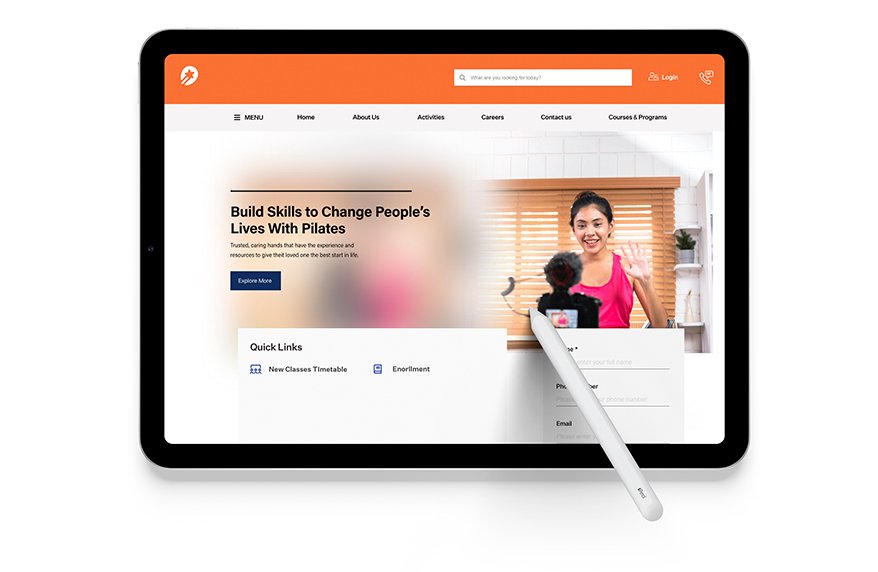
There are ten website builders on this list. Nine of them are genuinely worth your time. One of them is the right choice for your specific situation, and the difference between choosing correctly and choosing based on a Top 10 article you found on Google can cost you weeks of rebuilding later.
We’ve tested all of them. Here’s what you actually need to know.
What is a Free Website Builder?
A free website builder is an online platform that lets you create a fully functioning website without writing code, hiring a developer, or paying anything upfront. You start with a pre-designed template, customise it using a visual editor, and hit publish, usually within a few hours. The platform handles hosting, software updates, and security in the background.
The catch: free plans include the builder’s branding on your site and put you on a subdomain (think yourbusiness.wix.com instead of yourbusiness.com.au). Paid plans remove both. We’ll flag those trade-offs for each platform as we go.
Every builder on this list offers a genuine free tier, not a free trial that expires in 14 days and locks your content. You can stay on the free plan indefinitely.
How Does a Free Website Builder Work?

The process is the same across every platform. Understanding it upfront will save you hours of frustration when you sit down to actually build.
Step 1: Create a free account. Register with an email address. No credit card required. Signing up to Wix, for instance, takes under 60 seconds.
Step 2: Choose a template. Select a pre-designed layout built for your industry: restaurant, portfolio, tradesperson, or online store. Every template on every platform reviewed here is mobile-responsive from day one.
Step 3: Customise your content. Replace placeholder text, swap images, add your logo, adjust colours and fonts. Most builders use a drag-and-drop editor. What you see is what visitors see.
Step 4: Add functionality. Install apps or widgets from an integrated marketplace, such as a contact form, booking calendar, payment gateway, or social media feed.
Step 5: Preview and publish. Check the site on mobile and desktop, then publish. It goes live instantly on your free subdomain.
Step 6: Connect a custom domain when you’re ready. Upgrade to a paid plan, connect your .com.au domain, and remove the builder’s branding.
Types of Free Website Builders
This is where most people go wrong. Choosing the wrong type of builder for your purpose is the most common mistake small business owners make, and it’s rarely flagged in generic builder reviews.
Drag-and-drop builders are the most beginner-friendly option. You move elements around the page visually without touching code. A Perth personal trainer can build a one-page site with a bio, class schedule, and contact form in an afternoon, no design experience required. Best options: Wix, Weebly, Strikingly, Jimdo.
Content management systems (CMS) separate your content from your design layer, making it easy to publish and update material regularly. More powerful than drag-and-drop builders, but with a steeper learning curve. A Melbourne food blogger publishing three recipes a week is better served by WordPress.com than by Wix. Best options: WordPress.com.
AI-assisted builders ask you a few questions about your business and generate a custom site automatically, including layout, colours, and copy suggestions. A Brisbane electrician can answer five questions in Wix ADI and get a ready-to-publish site with a service list, photo gallery, and quote request form in under ten minutes. Best options: Wix ADI, Jimdo Dolphin.
E-commerce builders prioritise selling. Even on free plans, they typically include inventory management, a shopping cart, and payment processing. Best options: Weebly, Strikingly (limited to one product on the free plan).
Developer-friendly builders give designers granular control over layout, animations, and code. They require time to learn but produce results that previously required custom development. A Sydney-based graphic designer using Webflow can build a portfolio with scroll-triggered animations and pixel-perfect layouts without writing a single line of backend code. Best option: Webflow.
One-page and landing page builders are optimised for single-page websites, ideal for product launches, events, or service providers who don’t need complex navigation. An Adelaide yoga teacher can get a clean one-page site live on Strikingly in under 30 minutes. Best options: Strikingly, Carrd.
The Best Free Website Builders in Australia
Wix
Wix is the most versatile free builder on this list and consistently ranks among the top choices for small businesses globally. The drag-and-drop editor works on an open canvas, meaning you can place any element anywhere on the page, which is genuinely uncommon among free-tier builders.

Free plan includes: Unlimited pages, 500 MB storage, built-in SEO tools, email marketing tools, video backgrounds, and custom galleries.
Key limitation: Wix branding appears on your site, and you’re on a wix.com subdomain. More importantly, once you publish with a template, you can’t change it without rebuilding your site from scratch. Choose your template carefully.
Paid plans from: Approximately AUD $17/month (verify current Australian pricing directly, as it shifts with exchange rates).
Real-world example: A Brisbane boutique uses Wix to run a product catalogue, blog, and events page on the free plan, then upgrades once they’re ready to accept online payments.
Best for: Small business owners and creatives who want flexibility and don’t mind spending a few hours learning the editor.
WordPress.com
WordPress.com is the hosted version of the world’s most-used CMS. According to W3Techs data from early 2026, WordPress powers around 43% of all websites on the internet, a figure that has been steadily climbing for over a decade. It’s important not to confuse WordPress.com (hosted, managed, no server required) with WordPress.org (self-hosted, requires you to arrange your own server). They share a name and almost nothing else.
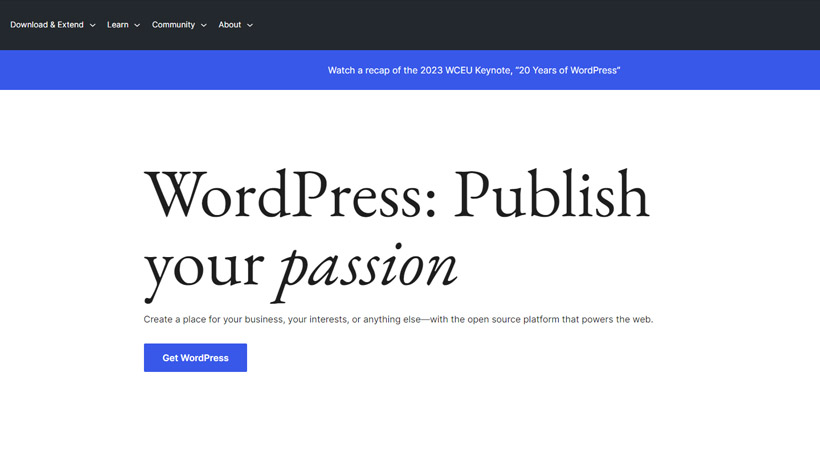
Free plan includes: Unlimited pages and posts, hundreds of themes, post revision history, and basic content tools.
Key limitation: Third-party plugins are unavailable on the free plan, which excludes a large portion of WordPress’s functionality. The free plan also displays WordPress.com ads on your site, ads you don’t control and don’t get paid for.
Paid plans from: Approximately AUD $6/month, which is among the cheapest entry points on this list.
Real-world example: A Melbourne accountant uses the free plan to publish weekly financial tips, building an audience before upgrading to a paid tier that removes ads and connects a custom domain.
Best for: Bloggers, content publishers, and businesses that frequently update their sites.
Google Sites
Google Sites is a stripped-down builder that prioritises simplicity and integration with the Google ecosystem over design flexibility. If your team already lives in Google Workspace (Drive, Docs, Slides, Calendar), it fits naturally.
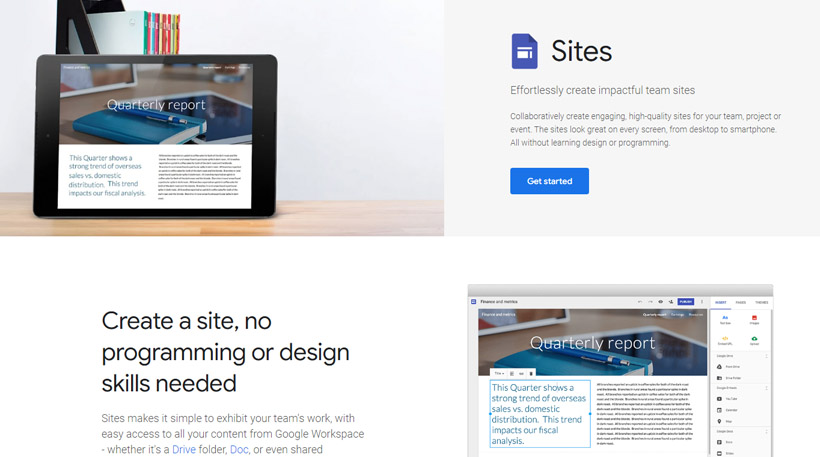
Free plan includes: Unlimited pages, integration with Google Drive, Google Analytics, Google Search Console, and YouTube. Entirely free with a Google account. No storage cap is advertised separately.
Key limitation: Very limited design options. Template variety is thin. Not suitable for e-commerce. A custom domain requires Google Workspace, which is a paid product starting at approximately AUD $10/month per user.
Paid plans: Google Sites itself is free indefinitely. You pay for Google Workspace separately if you want a custom domain email.
Real-world example: A TAFE teacher in NSW uses Google Sites to build a course resource hub for students, embedding Google Slides presentations, Drive documents, and YouTube videos on a single, organised page.
Best for: Internal team sites, community groups, educational institutions, and any business already paying for Google Workspace.
Jimdo
Jimdo is the fastest route to a live website on this list. Its AI-powered setup (Jimdo Dolphin) generates a basic site based on your answers to a short questionnaire, often in under 15 minutes.

Free plan includes: A jimdo.com subdomain, basic SEO controls (page title, meta description, URL slugs), and mobile-responsive templates.
Key limitation: Limited customisation. Online store functionality on the free plan supports only PayPal and manual payments, which is fine for some sole traders but limiting for anyone running serious volume. Storage caps apply.
Paid plans from: Approximately AUD $13/month.
Real-world example: A sole-trader bookkeeper in Adelaide needs a simple web presence with her contact details and service list. She builds it with Jimdo Dolphin in 15 minutes and adds the link to her business cards the same afternoon.
Best for: Sole traders, service providers, and anyone who needs a basic web presence without spending hours on it.
Weebly
Weebly is the strongest free option for selling products online. Very few builders let you run a functioning e-commerce store on a free plan. Weebly does, with more features than you’d expect.

Free plan includes: Free SSL certificate, inventory management, order notifications, basic coupon tools, item badges, and Square payment processing. No custom domain.
Key limitation: Weebly branding appears on your site. Features like abandoned cart recovery (one of the highest-impact e-commerce tools for small stores) require a paid plan. Advanced shipping rules are also locked.
Paid plans from: Approximately AUD $15/month.
Real-world example: A Wollongong jeweller starts selling on the free plan while testing demand. Once orders are consistent, she upgrades to connect her own domain and enable cart recovery emails.
Best for: Micro-businesses and side hustles wanting to sell products online before committing to a monthly platform fee.
Webflow
Webflow is a professional-grade builder aimed at designers and developers. It produces some of the cleanest, most technically polished websites of anything on this list, but the learning curve is real and should not be understated.
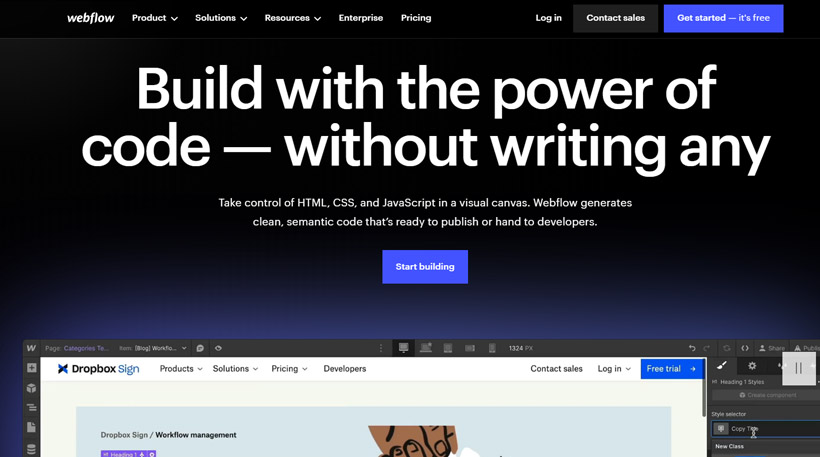
Free plan includes: Two projects, basic CMS functionality (up to 50 CMS items), and a webflow.io subdomain.
Key limitation: Custom code embedding is restricted to the free plan. The interface takes several days to learn properly. It is not a builder you pick up in an afternoon. Webflow branding appears on free-plan sites.
Paid plans from: Approximately AUD $22/month.
Real-world example: A Melbourne UX agency uses Webflow to build client sites with responsive animations and CMS-powered blog sections, a quality level previously achievable only with bespoke development and significantly larger budgets.
Best for: Designers, developers, and agencies who need full creative control and are willing to invest time in learning the platform.
Strikingly
Strikingly specialises in one-page websites and does them better than most platforms do anything. It’s fast, simple, and the free plan is more generous than competitors in this category.

Free plan includes: Unlimited sites on a strikingly.com subdomain, 5 GB monthly bandwidth, 500 MB storage per site, 24/7 support, and the ability to sell one product.
Key limitation: Multi-page websites require a paid plan. Custom domain requires upgrading.
Paid plans from: Approximately AUD $12/month.
Real-world example: A Byron Bay surf instructor builds a one-page site with a lesson overview, video background, testimonials, and a contact form. Published and shared on Instagram the same day.
Best for: One-page sites, landing pages, service providers, event pages, and anyone launching something quickly.
Webnode
Webnode stands out for its multilingual support, which is rare in this category and genuinely useful for Australian businesses serving culturally diverse communities or international customers.

Free plan includes: Basic multilingual content tools, drag-and-drop editor, and a webnode.com subdomain.
Key limitation: Limited font choices and colour customisation. Template selection is smaller than that of competitors. The free plan is thin on features compared to Wix or Weebly.
Paid plans from: Approximately AUD $7/month, and even the cheapest paid plan includes a free professional email address, which is genuinely uncommon at this price point.
Real-world example: A Vietnamese-Australian restaurant in Footscray publishes its menu in both English and Vietnamese, reaching customers searching in either language.
Best for: Businesses serving multilingual communities, small exporters, and anyone needing basic international reach without a complex setup.
HubSpot Website Builder
HubSpot’s free website builder makes sense if you’re already using (or planning to use) HubSpot’s CRM, email marketing, or sales tools. The integration between the site and HubSpot’s data layer is the product’s main value proposition. As a standalone website builder, it’s average.
Free plan includes: Drag-and-drop editor, a library of themes, SSL security, and connection to HubSpot’s free CRM and marketing tools. HubSpot branding appears on free-plan sites.
Key limitation: Without HubSpot’s marketing suite, you’re using an average builder with heavy branding. The platform makes the most sense in a broader sales and marketing context, not as a standalone website tool.
Paid plans from HubSpot’s CMS Hub start at approximately AUD $32/month, the most expensive entry-tier plan on this list.
Real-world example: A Sydney B2B consulting firm launches a website that automatically logs every contact form submission into their CRM, enabling their sales team to follow up without any manual data entry.
Best for: Businesses already using HubSpot’s CRM or planning to build a marketing and sales stack around HubSpot.
Site123
Site123 prioritises speed and simplicity. The builder itself is basic, but the built-in SEO tools are surprisingly solid, including an SEO adviser that walks you through completing page titles, descriptions, and headings.
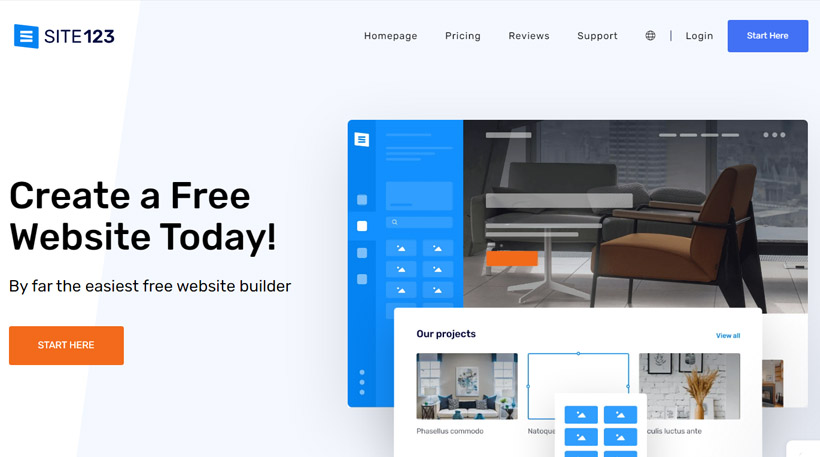
Free plan includes: A site123.me subdomain, basic SEO settings, a built-in SEO adviser, and integrations with Google Tag Manager and Google Search Console.
Key limitation: Limited design flexibility. The free plan carries Site123 branding.
Paid plans from: Approximately AUD $12/month.
Real-world example: A sole-trader dog groomer in Geelong uses Site123 to build a fast-loading mobile site in an hour. The SEO adviser walks her through the basics, and within a few weeks, she’s appearing in local search results.
Best for: Local service providers who want a fast setup and basic SEO guidance built into the platform.
Is a Free Website Builder Good Enough for an Australian Small Business?
For many businesses, yes, with one important caveat.
A free plan on Wix, WordPress.com, or Weebly will give you a clean, professional-looking site with your services listed, a contact form, and enough SEO tools to start appearing in local search results. That’s a meaningful web presence and costs nothing.
The two main limitations (a subdomain like yourbusiness.wix.com instead of yourbusiness.com.au, and the builder’s branding on your site) are both solved by upgrading to a paid plan, most of which cost less per month than a single takeaway lunch. The free plan is a starting point, not a permanent ceiling.
Where free plans genuinely fall short is in local SEO. Google gradually gives more authority to custom domains. If you’re a tradie or service provider competing for location-specific searches (“plumber inner west Sydney,” “electrician Parramatta”), operating on a subdomain puts you at a structural disadvantage relative to competitors with .com.au domains. Getting your own domain costs approximately AUD $20/year through registrars like VentraIP or Crazy Domains. That’s worth doing early, even if you stay on a free builder plan.
Why Mobile-Responsive Design Matters More Than Ever
Australian mobile web traffic crossed 50% for the first time in 2024-2025. By end of 2026, industry projections point toward 55-60%. The majority of people visiting your website for the first time are doing so on a phone, which matters when evaluating builder templates.
Every template on every builder reviewed here is built to display correctly on smartphones and tablets. But “built to be responsive” and “actually looking good on a small screen” aren’t always the same thing. Use your builder’s mobile preview tool before publishing, and test on an actual phone after. What looks right on a desktop monitor frequently needs adjustment at 390 pixels wide.
Benefits of Using a Free Website Builder
No upfront cost. You can test whether a website works for your business before spending anything. Particularly valuable for sole traders and new businesses still validating their idea.
No coding skills required. Every builder on this list uses a visual editor. You don’t need to know HTML, CSS, or JavaScript to produce something professional-looking.
Fast setup. A basic site can be live within a few hours. Jimdo and Strikingly can get you published in under 30 minutes if you’re prepared.
Built-in security. Free plans include SSL certificates (the padlock in the browser bar) that encrypt data between your site and visitors. This matters for any business collecting contact form submissions.
Scalable. You start free and upgrade only when your needs grow. You’re not committing to enterprise pricing from day one.
Risks and Limitations Worth Knowing
Platform lock-in is real. Moving your website from one builder to another is rarely simple. Your design, content structure, and URL patterns are tied to the platform. If you build 40 pages in Wix and later want to switch to WordPress, you’re rebuilding, not migrating. Choose carefully from the start.
Subdomain instead of a custom domain. Your free site lives on the builder’s domain. This looks less professional than a custom domain and has a measurable effect on local SEO over time.
Builder branding. Most free plans display the builder’s logo somewhere on your site. For a customer-facing business website, this can undermine credibility, particularly in industries where clients closely evaluate professionalism.
Limited integrations. Free plans often restrict third-party apps, such as payment gateways, booking systems, and CRM integrations. Many of these require upgrading.
Ads on your site. WordPress.com and HubSpot display the platform’s own advertising on free-plan sites without your control. Both remove this on paid tiers.
What’s the Difference Between WordPress.com and WordPress.org?
This is the most common point of confusion we encounter when clients come to us after a frustrating DIY build.
WordPress.com is a hosted platform. Sign up, choose a plan, and WordPress.com handles servers, security, and updates. The free plan is available but limited: no third-party plugins, ads displayed on your site, and restricted customisation.
WordPress.org is the open-source CMS software you download and install on your own server. It’s free to use, but you pay separately for hosting and a domain, and you’re responsible for maintenance, updates, and security. In exchange, you get complete control and access to over 70,000 plugins, including WooCommerce, which alone powers a significant share of Australian e-commerce stores.
For most Australian small businesses starting out, WordPress.com is the lower-friction option. If you eventually outgrow it (and many businesses do), migrating to a self-hosted WordPress.org installation is well documented and achievable with developer support.
Best Practices Before You Start Building
Write your content before you open the builder. The most common delay in website projects is waiting for copy: your service list, about page, and contact details. Have a draft ready before you sit down to build.
Start with a professional template, not a blank canvas. Industry-specific templates exist on every platform reviewed here. Starting with one that’s close to what you want is always faster than building from scratch.
Fill in every SEO field. Every page should have a unique title tag (under 60 characters) and meta description (under 160 characters). Most builders prompt you for these. Don’t skip them. They directly affect how your site appears in Google search results.
Connect Google Analytics and Google Search Console from day one. Both are free. Analytics shows where your traffic comes from. Search Console shows which search queries your site appears for and flags any technical errors. Most builders make this connection straightforward.
Register your custom domain sooner rather than later. Even if you stay on a free plan for now, registering yourbusiness.com.au through a registrar like VentraIP or Crazy Domains protects your brand name and means you’re ready to upgrade without disruption. From approximately AUD $20/year, it’s one of the cheapest brand-protection decisions you can make.
Pricing Comparison
| Builder | Free Plan | Entry Paid (approx. AUD/month) | Notable |
| Wix | Yes | ~$17 | Most flexible drag-and-drop |
| WordPress.com | Yes | ~$6 | Cheapest paid entry |
| Google Sites | Yes (free) | N/A | Free indefinitely |
| Jimdo | Yes | ~$13 | Fastest setup |
| Weebly | Yes | ~$15 | Best free e-commerce |
| Webflow | Yes | ~$22 | Best design quality |
| Strikingly | Yes | ~$12 | Best one-page builder |
| Webnode | Yes | ~$7 | Multilingual support |
| HubSpot | Yes | ~$32 | Best with HubSpot CRM |
| Site123 | Yes | ~$12 | Built-in SEO adviser |
All prices are approximate and subject to change. Exchange rates and local pricing adjustments affect these figures regularly. Verify directly with each platform before making a decision.
Which Builder Should You Choose?

- Already using HubSpot tools? HubSpot Website Builder.
All ten platforms offer a free plan. Sign up for two or three, spend 30 minutes on each, and see which interface actually feels natural to use. The best website builder is the one you’ll finish building on, not the one with the longest feature list.
Pricing and feature information should be verified directly with each platform before making a business decision. This article was written by the team at Keen To Design, a web design agency based in Sydney, Australia.
